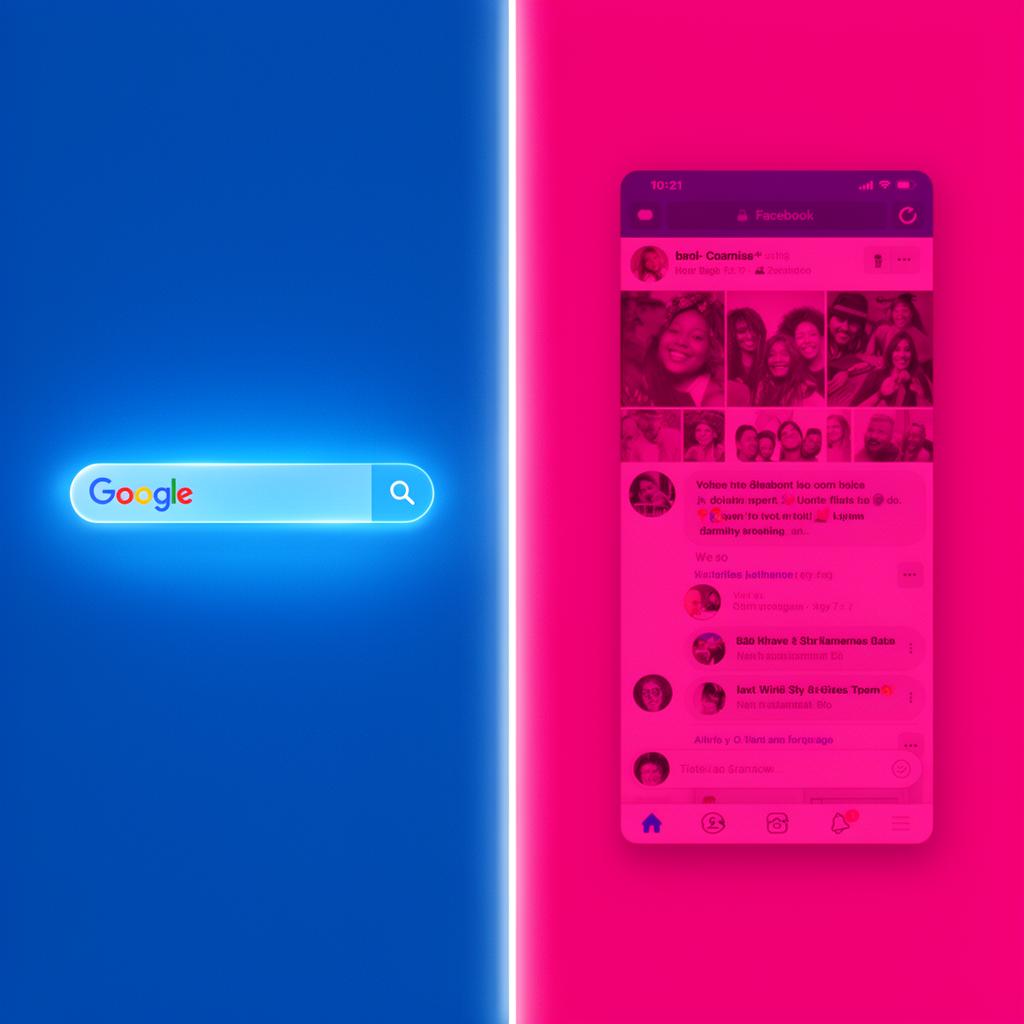
The Facebook vs Google debate is older than most ad accounts. But in 2026 the answer has shifted dramatically — iOS privacy changes, AI-powered ad delivery, and rising CPCs have changed who wins. This guide compares the two platforms across the metrics that actually predict profit.
What you'll learn
In this guide
- 1. The fundamental difference is intent
- 2. Cost benchmarks in 2026
- 3. Audience targeting has converged
- 4. Creative beats targeting (on both)
- 5. Attribution is broken — plan for it
- 6. The decision framework
1. The fundamental difference is intent
Google Ads captures demand. Facebook Ads creates it. That single distinction explains 80% of why one platform works better than the other for a given business.
2. Cost benchmarks in 2026
CPMs are up across both platforms. CPCs depend heavily on vertical. The table below shows the 2026 median benchmarks across 12 industries.
3. Audience targeting has converged
Post-iOS-17 and Google's Privacy Sandbox, both platforms now rely heavily on AI-driven 'broad' targeting. Hyper-narrow targeting is mostly dead. Strong creative now matters more than precise audience selection.
Median 2026 ad costs by platform
| Metric | Facebook / Meta | Google Search | Google Display |
|---|---|---|---|
| CPM | $14.20 | — | $3.10 |
| CPC | $0.97 | $3.18 | $0.62 |
| Conv. rate | 1.4% | 4.7% | 0.6% |
| Median ROAS | 3.1× | 4.4× | 1.8× |
4. Creative beats targeting (on both)
The single biggest lever in 2026 is creative variation. Top-performing accounts test 20+ creatives per month. Use the checklist below to keep your creative pipeline healthy.
Healthy creative pipeline checklist
- 5+ new ad concepts tested per week
- Mix of UGC, founder-led, and motion graphic
- Hooks tested independently from ad bodies
- Losing ads killed within 48 hours of clear data
- Top performer scaled by 20% per cycle, not doubled
5. Attribution is broken — plan for it
Don't trust last-click. Use platform-reported ROAS as a directional signal, then triangulate with post-purchase surveys and incrementality tests.
Consistency beats intensity. Small daily inputs compound into outsized results within 90 days.
6. The decision framework
If your customer is actively searching for your category → Google. If your customer doesn't know they need you yet → Facebook. If you have budget for both, start where intent is highest, then layer the other.
Learn paid ads from real practitioners
Aiskillo's Paid Ads Mastery course walks through campaign setup, creative testing, and attribution — taught by current agency operators.
View paid ads course →Frequently asked questions
Which platform is easier for beginners?
How much should I budget to start?
Are Meta ads dead?
Should I run both at once?
What actually moves the needle
Aiskillo benchmarkRelative impact of each lever based on 2026 case-study data across our learners.
Enjoyed this article?
Get weekly insights from our team.
Premium playbooks, deep-dives, and case studies — straight to your inbox.